

World’s First
Autonomous Oil Boom Containment System
and Autonomous Oil Skimmer System
System operates non-crewed, in real time, controlled by RSA’s algorithm through satellite, drone, and onboard sensor data
- Rapidly deploys dedicated autonomous vessels to surround and contain an oil spill with boom within minutes, holding the oil in place until skimmer vessels arrive to begin recovery.
- Continuously reshapes the boom as the spill moves with wind, waves, and currents.
- Autonomous Oil skimmer command vessel and two autonomous skimmers drive into oil spill.
- Reduces response time, lowers risk to crews, and helps protect shorelines, ports, and marine ecosystems.
Reduces fines from uncontrolled oil spills
CURRENT PROBLEMS WITH DEPLOYING OIL BOOM
Heavy equipment: Boom sections are bulky and can weigh hundreds of pounds, requiring cranes, powered reels, or several crew members to handle safely.
Working on moving vessels: Crew members are often on small workboats that pitch and roll, increasing the risk of slips, falls, or being struck by equipment.
Time pressure: During a spill, crews are expected to deploy boom quickly to prevent oil from spreading, often while coordinating with multiple boats.
Weather and sea conditions: Wind, waves, currents, rain, darkness, and cold can make deployment much more difficult.
Boom tension: As the boom is towed, it comes under significant load. If a tow line or connector fails, it can recoil dangerously.
Oil exposure: Workers may be exposed to oil, fumes, and contaminated water, requiring protective equipment and decontamination procedures.
Coordination: The operation requires constant communication among vessel operators, boom handlers, incident commanders, and often aircraft or drones.
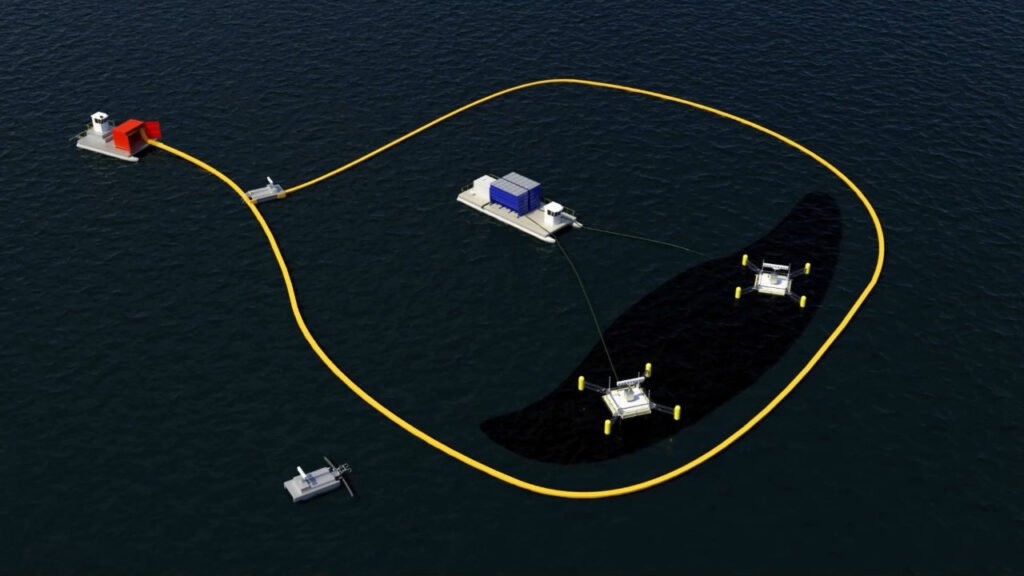
encloses oil spill
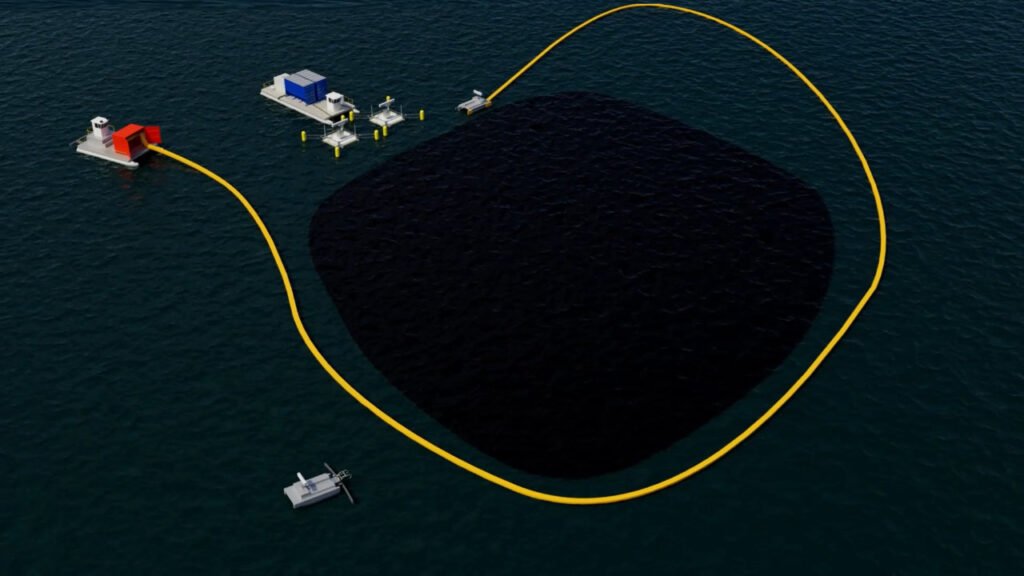
produces a gate for skimmers
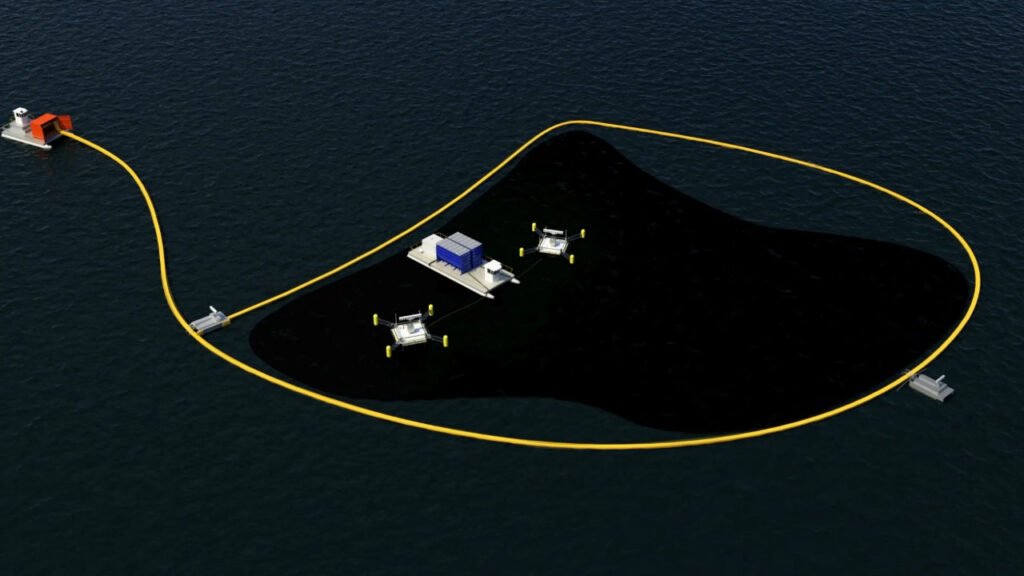
repositions boom as wind/wave migrates oil spill
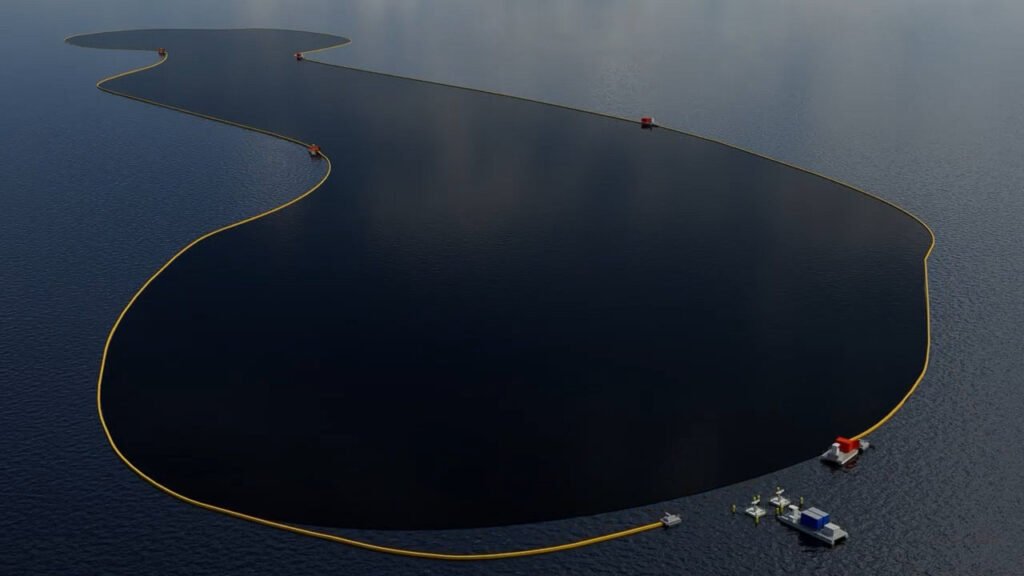
combined – tow vessel opens the area for skimming vessels to enter the spill and then recloses the boom line
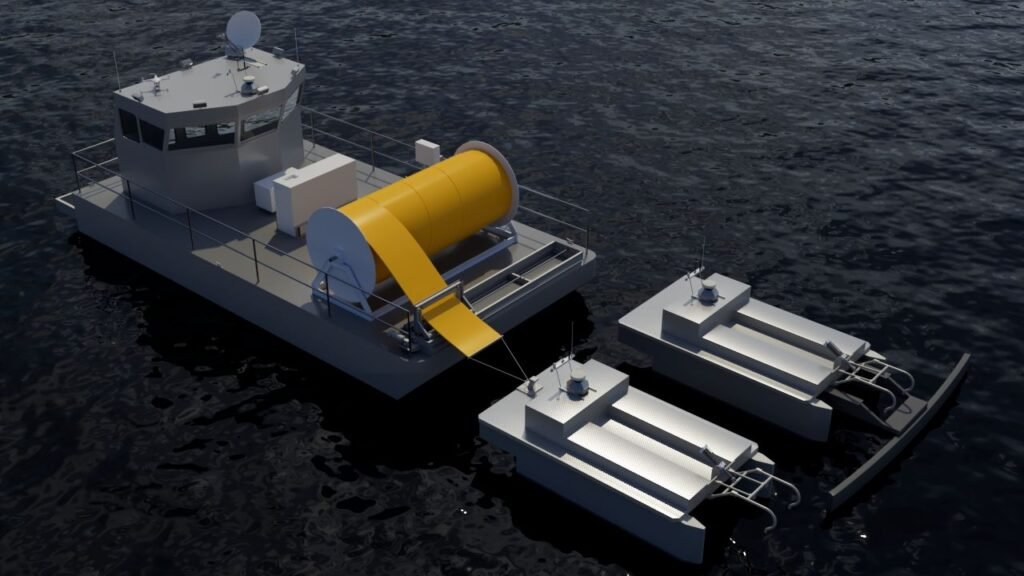
autonomous command vessel with reeled oil boom an tow and shaper vessels – rear/side view
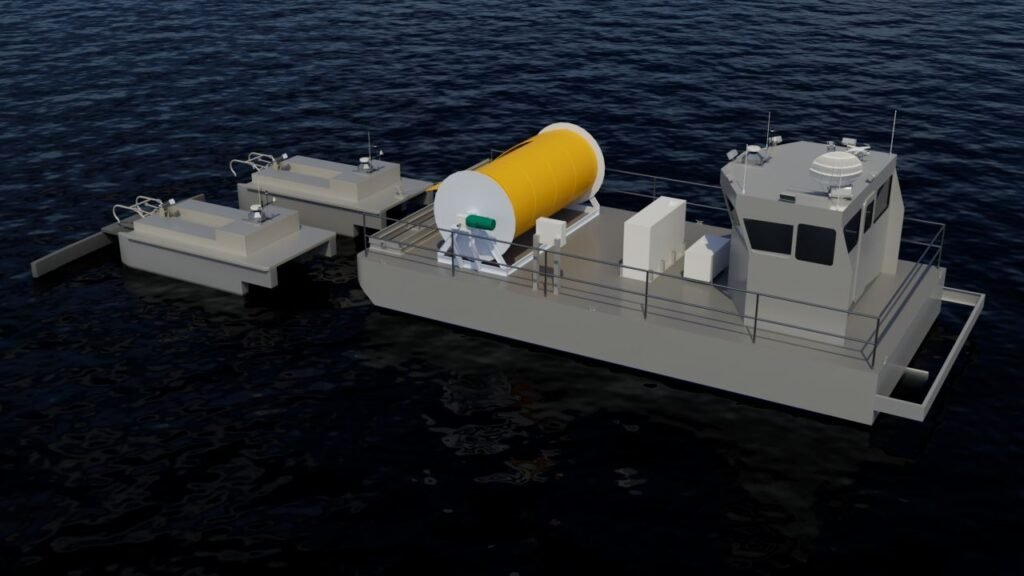
autonomous command vessel with reeled oil boom an tow and shaper vessels – front/side view
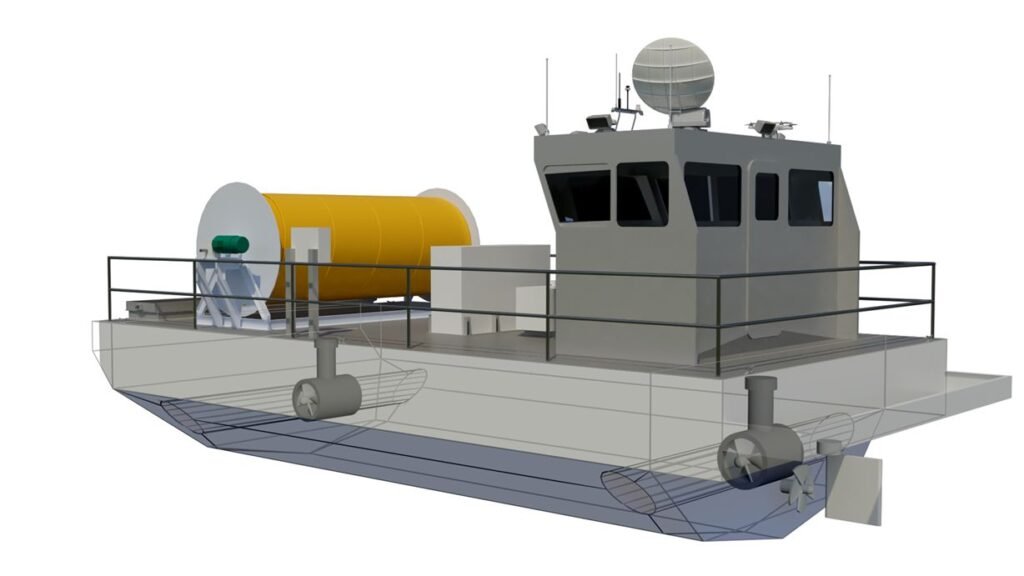
bow and stern thrusters
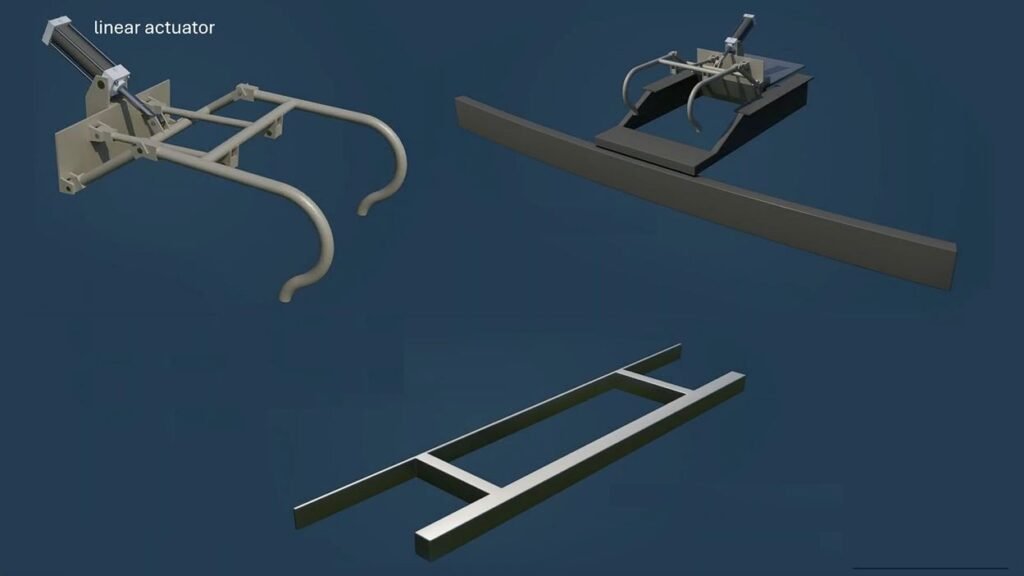
attachments
The RSA Autonomous Boom System is expected to reduce containment operating costs by approximately $50,000–$150,000 during a typical multi-day marine response, while offering the potential to avoid hundreds of thousands—or even millions—of dollars in downstream cleanup and environmental damage by containing the spill earlier and more effectively.